
Damage and restoration efforts from August 11 storm
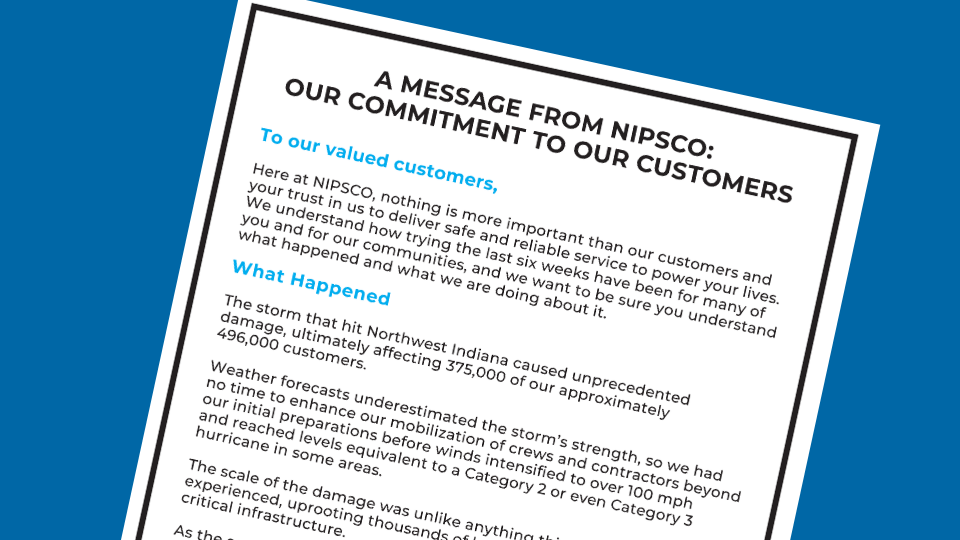
The August 11, 2026, derecho that hit Northwest Indiana, and the storms that followed, caused unprecedented damage to the region and to NIPSCO’s system.
We recognize the significant hardship that the prolonged outages caused for affected communities, and we have heard the questions and concerns from our customers. NIPSCO is focused on examining our response and applying lessons learned for future severe storms – to build a stronger electric system and stronger communities.
Our commitment: We will do better.
This storm will inform NIPSCO’s approach moving forward. We have hired an independent third-party expert to conduct a thorough review of our storm response, and we will release the results publicly.
This storm will also help all
of us think about how Indiana prepares for severe weather, which is becoming much more common. An event of this scale is not something a utility responds to alone. It requires coordination among the utility, state government, local leaders, emergency-management
agencies, first responders, and communities. We are committed to being a good partner and to engaging in this important conversation.
Customer Assistance and Resources
Frequently Asked Questions
8-11 Storm | 1. What caused the outages?
We recognize the significant hardship that the prolonged outages caused for customers, families, and businesses, particularly in the region’s most heavily affected communities.
The outages stemmed from the widespread and severe storms, including an August 11th derecho that caused unprecedented damage across NIPSCO’s electric system.
Weather forecasts underestimated the strength of the storm, which produced winds exceeding over 100 mph and reaching levels equivalent to a Category 2 or even Category 3 hurricane in some areas. This placed extraordinary stress on our electrical system.
The scale of the damage was unlike anything Northwest Indiana has experienced. It uprooted thousands of large trees and damaged critical infrastructure, including five transmission towers and approximately 1,500 poles, more than 15 times the average of our previous five major storms.
Need assistance?
Visit our customer support page.